A plain-English guide to pound-cost averaging
You have a lump sum ready to invest. Do you put it all in today, or ease it into the market over a few months?
It sounds like a question with a clever market-timing answer. In reality, the evidence points to something much simpler: because markets rise more often than they fall, investing sooner has usually produced the better result. But "usually" is not the same as "always", and the best plan is one you can actually stick with.
First, what actually is pound-cost averaging?
Pound-cost averaging means investing a fixed amount at regular intervals. Someone with £60,000 might invest £10,000 a month for six months instead of investing the full amount on day one.
If markets fall during that period, later payments buy at lower prices. If markets rise, part of the money is still sitting in cash and misses some of the growth. That is the trade-off in a nutshell.
The odds have favoured investing sooner
The Vanguard research below compared investing immediately with spreading a lump sum over three months. Looking at global share markets from 1976 to 2022, investing immediately came out ahead in 68% of the one-year periods studied. The UK result was almost identical.
That does not mean investing everything in one go is the best way to invest. But it does reflect a familiar Edgewater principle that we have touched on in several previous articles: Stay the Course and Why Staying the Course Continues to Pay – Time in the market tends to beat timing the market.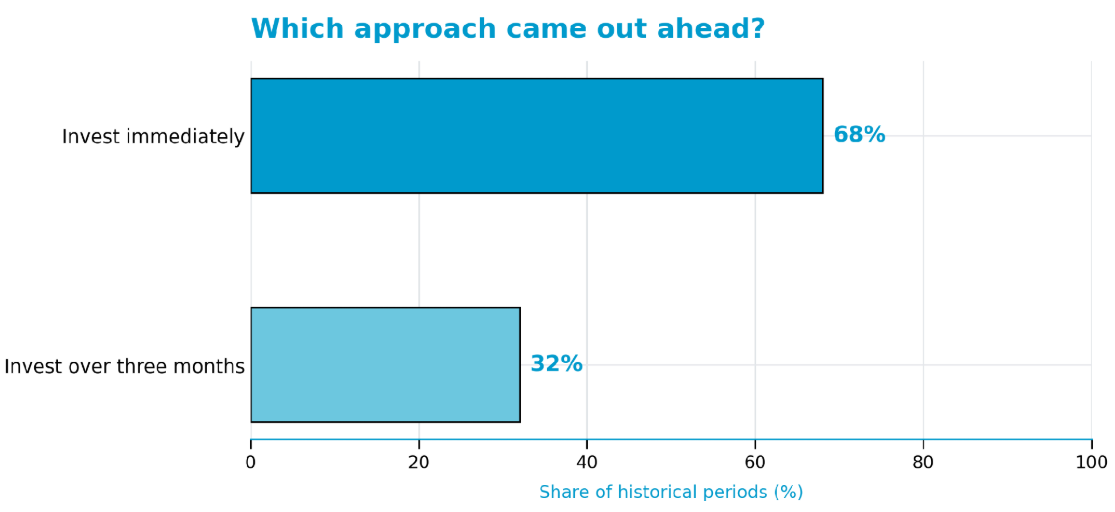
Source: Vanguard, Cost averaging: Invest now or temporarily hold your cash? (2023). MSCI World Index, 1976–2022. Comparison of immediate investment versus investing in three equal monthly instalments. Past performance is not a guide to future performance.
So why would anyone invest gradually?
Because investing is not just about chasing the highest possible return. It is also about choosing a route that feels manageable.
Putting a large sum into markets and then seeing it fall a week later can be hard to stomach. Phasing the investment reduces the amount exposed on day one. In poor markets, that can soften the initial fall. The catch is that it also reduces the benefit when markets rise.
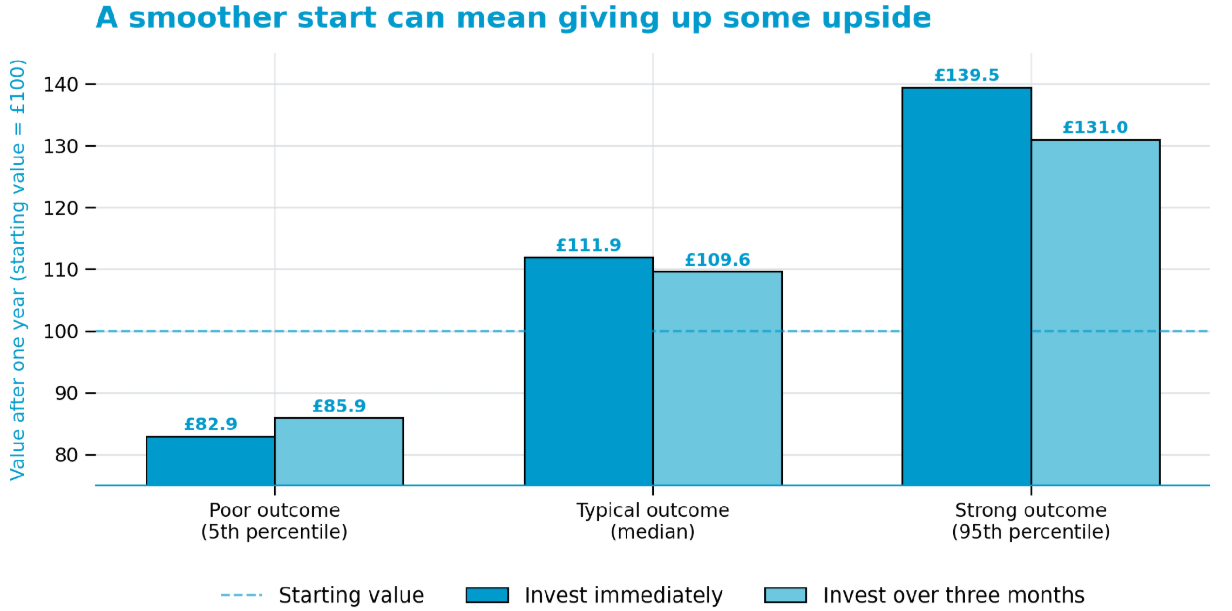
Source: Vanguard (2023). Historical one-year outcomes for £100 invested immediately versus over three months using global equity market data (1976–2022). Past performance is not a guide to future performance.
A useful compromise
For a cautious investor, a short, fixed timetable can be sensible. The important word is fixed. If the timetable keeps changing every time the headlines change, careful phasing can quickly turn into market timing.
The behavioural benefit may matter most
Most of us have had the same internal debate: "I'll wait for a fall." Then markets do fall and the thought becomes: "Perhaps I should wait until things calm down." If markets rise instead, investments suddenly look too expensive. The perfect moment keeps eluding us.
A written schedule removes that repeated decision. It may not beat investing immediately, but it can be much better than remaining in cash indefinitely or buying and selling in response to every unsettling headline.
Monthly saving is a different story
Investing part of your salary each month is not the same as holding back a lump sum. The future money is not available yet, so you are simply putting it to work as it arrives.
This is where regular investing really earns its place. It builds a habit, removes the monthly "is now a good time?" question and gives each payment the chance to compound.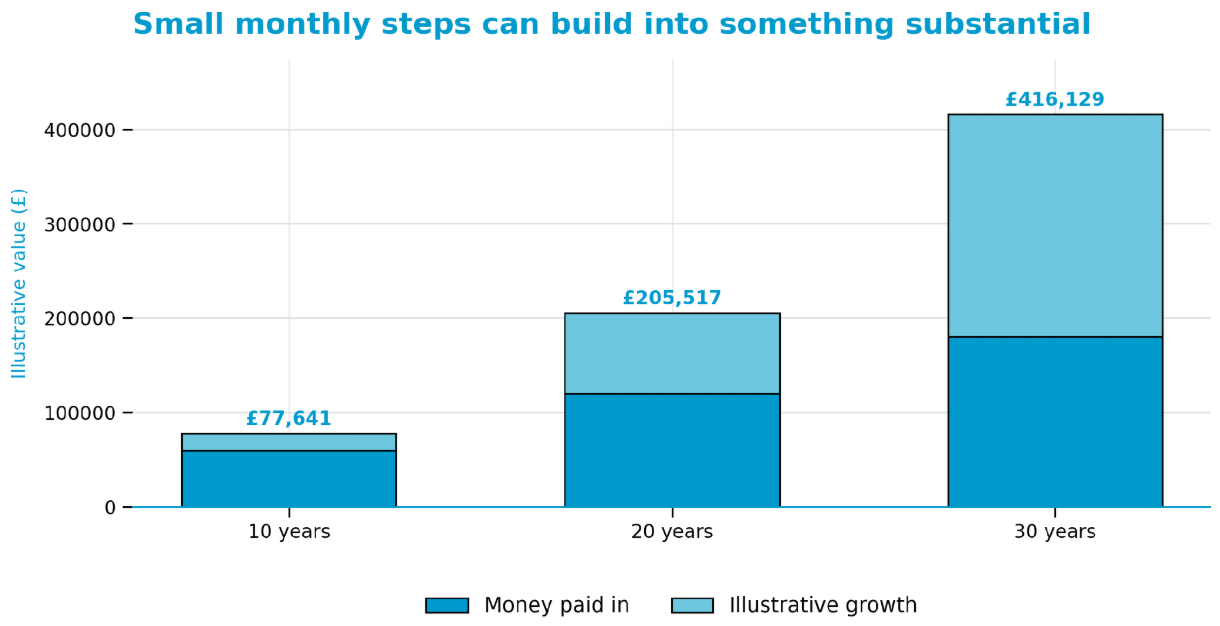
This illustrative example assumes £500 invested at the end of each month and a constant 5% annual return before charges and tax. This is not a forecast or projection. Actual returns will vary and could be lower.
Which route is right for you?
| Invest immediately | Invest gradually |
|---|---|
| Historically offered the better chance of a higher return | Can reduce the impact of a poor entry point |
| Maximises time in the market | May feel more comfortable for a cautious investor |
| Best when you are comfortable with the agreed portfolio | Works best with a short, predetermined timetable |
The bottom line
If a lump sum is already available, investing it sooner has historically given it the better chance to grow. For someone who would struggle with committing everything at once, a short phased approach can still be a perfectly reasonable way to get started.
The bigger danger is often doing nothing while waiting for certainty. Markets rarely provide it. Start with a portfolio that suits you, have a clear plan and give that plan time to work.
If you would like to discuss investing a lump sum or setting up regular contributions, please contact our team. We would be happy to help.
The value of investments can fall as well as rise and you may get back less than you invest.
Market Insights
Our Investment Committee regularly publishes market updates, financial commentary, insights on Government policy changes and relevant policy developments that we believe you will find useful. These can be found on Edgewater's website (under "Insights"), as well as Edgewater LinkedIn and Edgewater Facebook pages. Please be sure to like and follow our channels to ensure you don't miss out on any new publications.
This article is directed at residents of the Isle of Man only and is not an offer or solicitation in any other jurisdiction. This article is intended for general information and discussion only and should not be regarded as financial, legal or professional advice.